I’m not going to lie. I have thought about Lon Lon Milk every single day for the better part of twenty-six years. Not in a casual way. Not in a “oh, that was a fun game” way. In a way that borders on clinical. In a way that has prompted Mark to gently suggest, more than once, that I “maybe talk to someone about the ranch thing.”
I don’t need to talk to someone about the ranch thing. I need to make the milk.
My cousin Tessa called on a Thursday in October. I remember it was Thursday because I was standing in the kitchen trying to decide whether the leftover soup in the back of the fridge had crossed the line from “still fine” to “science experiment,” and Thursdays are when I do that. Mark calls it “fridge court.” I call it responsible food management. We have agreed to disagree.
“I’m going to Hyrule Field this weekend,” Tessa said, no preamble, no hello. That’s Tessa. She opens conversations the way other people open emergency exits — with force and an assumption that everyone is already on board. “There’s a ranch. Lon Lon Ranch. I want to see the horses.”
I set the soup down. I had not been to Hyrule Field since I was nineteen, and that trip had involved a very ill-advised attempt to cross the field at night without a horse, a series of Stalchildren encounters that I still dream about, and a vow — made loudly, to no one, at two in the morning — that I would never go back. But that was before I understood what I’d missed. That was before I understood about the milk.
“What horses?” I asked, even though I knew exactly what horses. I was stalling. I was already packing.
“All the horses,” Tessa said. “Pack boots.”
I packed boots. I also packed a second pair of shoes — these little canvas slip-ons that I thought would be good for the ranch — because I am a person who chronically overpacks footwear and underpacks common sense. Mark watched me from the doorway of the bedroom while I tried to fit a jacket, two scarves, a rain shell, and a hat into a bag that was already too small.
“It’s a ranch,” he said. “In a field.”
“It’s a ranch on a plain,” I said. “Plains have weather.”
“You’re bringing two scarves.”
“One is emotional support.”
He kissed my forehead and told me to text when I got there. I love that man. I also love that he has learned, over the years, not to ask follow-up questions when I say things like “emotional support scarf.”
The thing about Hyrule Field that nobody tells you — or maybe they do tell you but you forget, because your brain edits out the boring parts of travel the way it edits out the boring parts of dreams — is that it is enormous. Just catastrophically, unreasonably, absurdly big. You can see for miles in every direction, and every single one of those miles looks exactly the same: gentle green grass, rolling hills, an enormous sky that makes you feel simultaneously free and deeply insignificant.
Tessa drove. She drives the way she does everything: with confidence, enthusiasm, and a relationship to speed limits that can best be described as “advisory.” I sat in the passenger seat and watched the landscape scroll by and thought about the fact that I was thirty-four years old and voluntarily returning to a place that had given me actual nightmares as a child.
I need to be honest — this part of the trip scared me. Not in a dramatic way. In that quiet way where your stomach gets tight and you don’t know exactly why. Maybe it was the field. Maybe it was the memory of those Stalchildren, bony fingers reaching up from the grass in the dark. Maybe it was just the feeling of going back to a place that mattered to you when you were young and not knowing if it would still matter now.
The grass was taller than I expected. Late-season grass, golden at the tips, bending in this rolling pattern when the wind moved through it that made the whole field look like it was breathing. Tessa had the windows down. The air smelled like cut hay and something faintly sweet — wildflowers, I think, though I couldn’t see them. Somewhere off to the east, I could see the shape of the castle against the sky, that impossible architecture that looks like a wedding cake designed by someone who had never been told no.
“There,” Tessa said, pointing.
And there it was. Lon Lon Ranch. Sitting right in the center of the field like it had always been there, which I suppose it had. A low wooden fence running the perimeter. A red barn with a weathervane. A silo. And horses — so many horses — milling around in a wide paddock, tails swishing, the occasional soft whinny carrying across the distance.
I’m going to be honest with you: I teared up. Not a lot. Just a little prickling behind the eyes that I blinked away before Tessa could see. Because this was the place. The place from the game, the place from my childhood, the place where a girl with red hair sang to horses and everything was simple and warm and good, and here it was, real and solid and smelling like hay.
Tessa saw me blink. “You okay?”
“Allergies,” I said. “The grass.”
“Sure,” she said, in a tone that meant she did not believe me even a little.
The gate was open. A hand-painted sign read LON LON RANCH in slightly uneven letters, the kind of lettering that suggested it had been done by someone who cared more about the ranch than the sign. We walked in. The ground was packed dirt, dusty and warm underfoot. To the left, chickens were doing that thing chickens do where they walk around with absolute authority and no discernible purpose. To the right, a man was asleep against the barn.
That was Talon. I recognized him immediately — red-cheeked, mustachioed, hat pulled down over his eyes, snoring with a commitment that bordered on performance art. He had his arms crossed and his boots stretched out in front of him, and he was so thoroughly unconscious that a chicken had settled in his lap without waking him. The chicken looked comfortable. Talon looked comfortable. It was a tableau of shared contentment.
“Should we…?” I gestured toward him.
“Nah,” came a voice from inside the barn. “He’ll be out for hours. Always is.”
Ingo emerged from the barn doorway, wiping his hands on a rag that had seen better decades. He was thin, sharp-faced, with a mustache that was somehow both meticulously groomed and deeply irritated. Everything about his posture suggested a man who had opinions about work ethic and was not afraid to share them.
“You here for the horses?” he asked.
“We’re here for the milk, actually,” Tessa said, because Tessa has never once in her life buried the lede.
Ingo’s expression cycled through surprise, suspicion, and something that landed in the neighborhood of grudging respect. “Malon handles the milk. She’s in the back pasture.” He pointed with the rag. “Past the corral, through the second gate. Don’t startle the horses.”
We did not startle the horses. We walked through the corral slowly, carefully, stopping to let a chestnut mare with an extraordinarily soft nose investigate Tessa’s jacket pocket. The horses were beautiful in a way that I keep trying to describe and failing at — not sleek, magazine-beautiful. Working beautiful. Warm and dusty and real, with tangled manes and strong legs and the kind of calm eyes that make you want to tell them your problems.
Malon was in the back pasture, sitting on a three-legged stool next to the most serene cow I have ever encountered in my life. The cow was enormous, cream-colored, and radiating a level of peace that most people only achieve after a week at a silent retreat. Malon was humming. Not a song I recognized — something low and slow and circular, a melody that seemed to have no beginning and no end, just a steady, sweet middle.
She looked up when she heard us. Red hair, exactly like I remembered. A face that managed to be both weathered and youthful, like someone who spent every day outside and every evening content. She smiled, and it was one of those smiles that makes you feel like you’ve been expected.
“You’re here for the milk,” she said. Not a question.
“How did you know?” I asked.
“People who come for the horses look at the horses,” she said. “People who come for the milk look at the bottles.”
I looked down. I had been staring at the row of glass bottles lined up against the fence. Caught.
The bottles were gorgeous. Thick glass, slightly blue-tinged, with wide mouths and cork stoppers. Each one filled with milk so white it almost glowed — not bright white, not sterile white. Warm white. The white of fresh cream, of something that was alive twenty minutes ago, with a richness you could see even through glass. I picked one up. It was cool to the touch, heavier than I expected, with a thin layer of cream gathered at the top that shifted slowly when I tilted it.
“That’s the morning batch,” Malon said, standing up from the stool. She wiped her hands on her apron. “The afternoon batch has a little more cream. But the morning milk is sweeter.”
“Sweeter?”
“The cows eat the clover first thing,” she said. “Before the sun gets too high. It changes the flavor.”
I didn’t know that about cows. I didn’t know clover timing affected milk sweetness. I stood there holding this bottle and absorbing the information that I was learning bovine dietary science on a Tuesday afternoon in a fictional field, and I thought: this is exactly where I’m supposed to be.
Malon pulled the cork from one of the bottles and poured two small cups. The milk came out thick and slow, almost reluctant to leave the bottle, with a viscosity that sat somewhere between whole milk and cream. It was — and I need you to understand I am choosing this word carefully — luminous. In the afternoon light, with the sun coming low across the pasture, the milk in those cups had a glow to it. Not literal glow, not magic glow. Just the glow of something fresh and clean and unprocessed, the way milk probably looked a hundred years ago before we started doing unspeakable things to it.
Tessa took hers. I took mine.
Friends, I took one sip and my entire body relaxed. Not in a dramatic, cinematic way — in a Tuesday-afternoon way. Like my shoulders dropped half an inch. Like a knot I didn’t know was there loosened between my shoulder blades. The milk was cold, sweet, faintly grassy in a way that tasted like the field smelled. There was a richness that coated the inside of my mouth, a butteriness that wasn’t butter but the suggestion of butter, the potential energy of butter, and underneath all of that, something warm. Something that felt like a hand on your back when you’ve had a bad day.
“Oh,” I said.
Malon was watching us with the calm patience of someone who has seen this reaction before. Many times.
“It’s the ranch,” she said. “Everything tastes like where it comes from.”
Tessa drank hers in one long pull, then looked at the empty cup like it had personally betrayed her by being finite. “Can we buy some?” she asked.
We bought four bottles. Malon wrapped them in cloth and packed them in a wooden crate and told us to keep them cold. Talon was still asleep when we left. The chicken had been joined by a second chicken. Ingo was repairing a fence post and did not look up as we passed, though I’m fairly certain I heard him mutter something about “tourists.”
I held the crate in my lap the whole drive home. I could feel the bottles clinking gently against each other with every bump in the road. The sun was going down over Hyrule Field, painting everything in that impossible golden-pink light that you only get on plains, where the sky is big enough to stage a full production. I watched it and thought about cows eating clover in the morning and milk that tastes like where it comes from and a girl with red hair who hums songs with no beginning and no end.
I stood in my kitchen at eleven o’clock that night and almost gave up.
Here’s the problem with Lon Lon Milk: it is devastatingly simple. Cold, fresh, sweet, rich, warm-feeling despite being cold. There is nothing to it. And yet there is everything to it. Trying to recreate it is like trying to paint a sunset — you know what it looks like, you can see it perfectly in your mind, and the moment you pick up a brush you realize that “warm” and “golden” and “peaceful” are feelings, not ingredients, and you can’t pour feelings into a shaker.
The first attempt was just good vanilla milk with booze in it. Fine. Drinkable. Completely wrong. It was missing the depth, the butteriness, the warmth-in-the-cold that made Malon’s milk feel like a hug.
Batch two, I tried adding malted milk powder. Closer — the malt gave it a toasty, rounded quality that pushed it toward nostalgia. But it was too thick, too shake-like. Lon Lon Milk is not a milkshake. It’s milk. Elevated milk. Milk that has been to finishing school and returned with poise.
Batch three, I dropped the malt and went heavy on the honey syrup. Too sweet. Cloying. Like drinking a compliment that won’t stop.
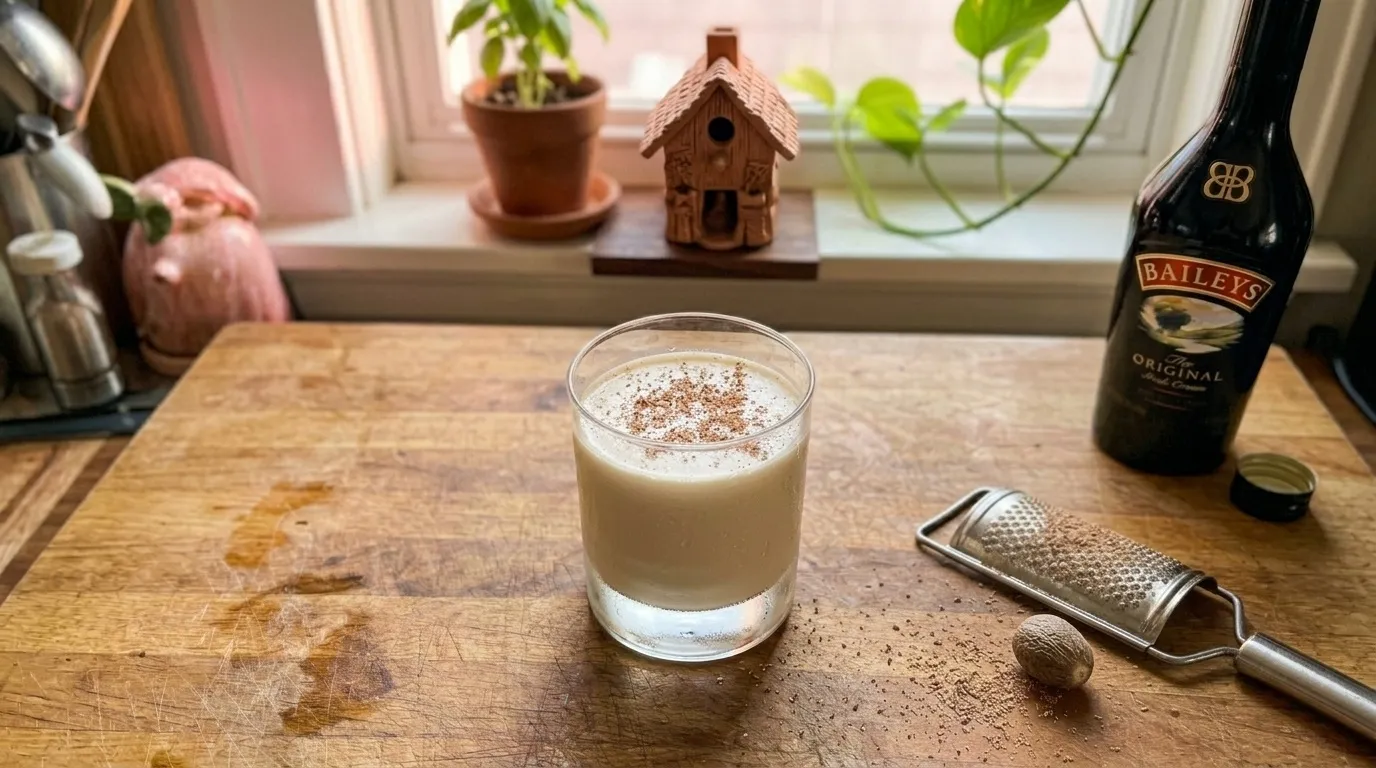
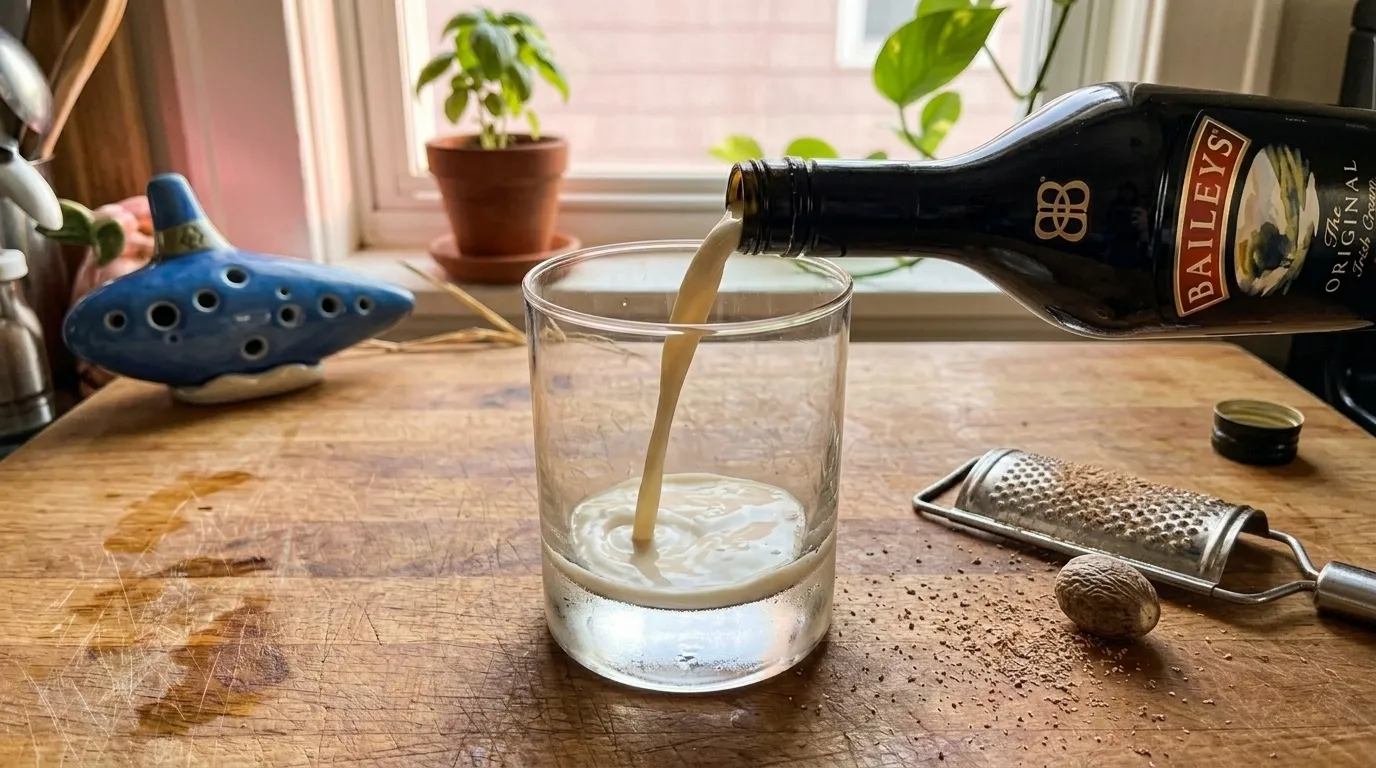
The breakthrough happened at two in the morning on a Wednesday, which is when all my best and worst ideas arrive. I was standing at the counter — this butcher block that Mark and I found at an estate sale three years ago, the one with the oil stain shaped like Michigan — and I was staring at the Irish cream and thinking about what it actually is. Irish cream isn’t just cream and whiskey. It’s an emulsion — cream, sugar, cocoa, and Irish whiskey, blended and stabilized so the fat and the alcohol coexist instead of separating. And that emulsion is what gives it body. Richness without heaviness. Sweetness that integrates instead of sitting on top.
That was the missing piece. The Irish cream wasn’t just a flavor component; it was a textural one. It was doing the work of making the drink feel like Malon’s milk — that thick, slow pour, that coating richness, that sense of substance. At two ounces, it provides the backbone without turning the drink into a dessert. The vanilla vodka reinforces the sweetness and adds a clean alcohol warmth that, I swear, mimics that mysterious warmth I felt in the pasture — the “hand on your back” quality. And the honey syrup, at just half an ounce, bridges the two. Honey has this almost floral quality when it’s diluted into syrup, and in this drink it reads as that faintly grassy, clover-adjacent sweetness that Malon told us about.
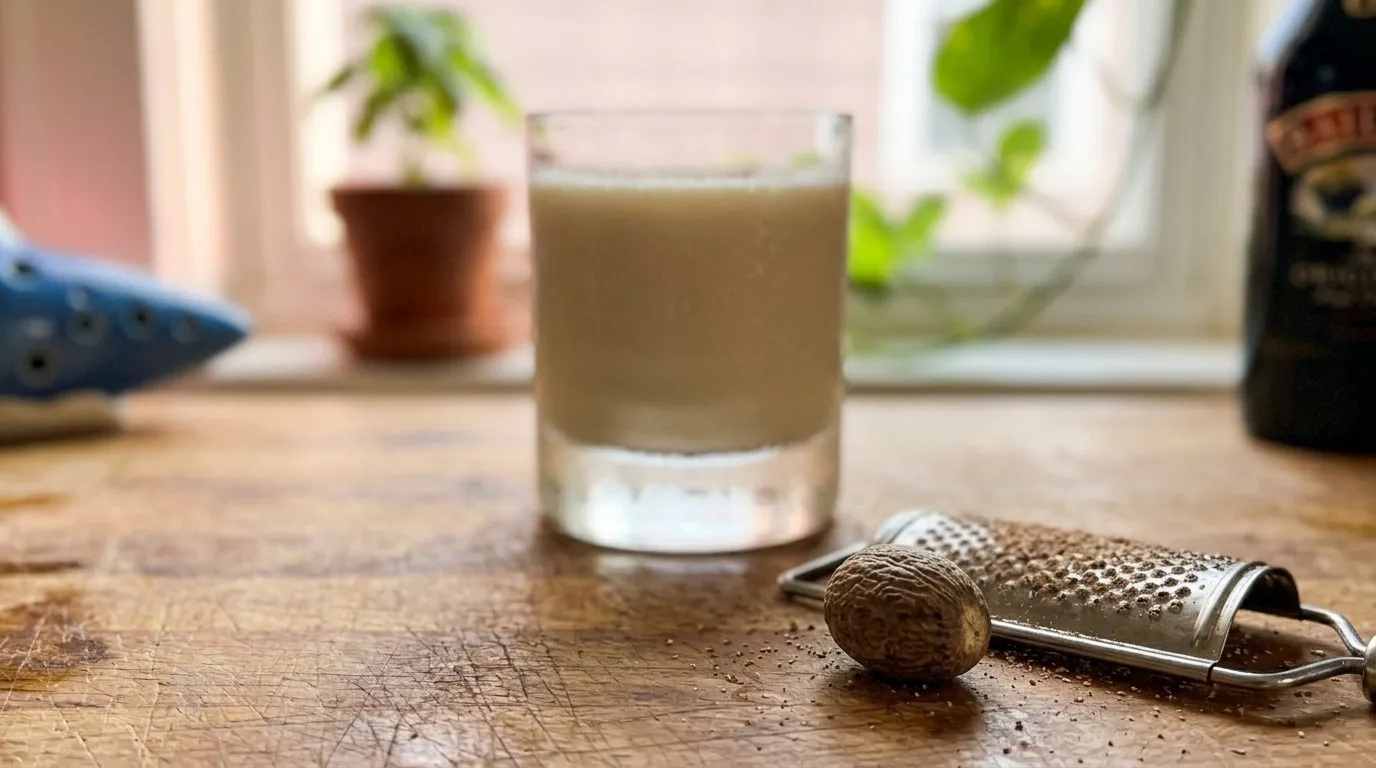
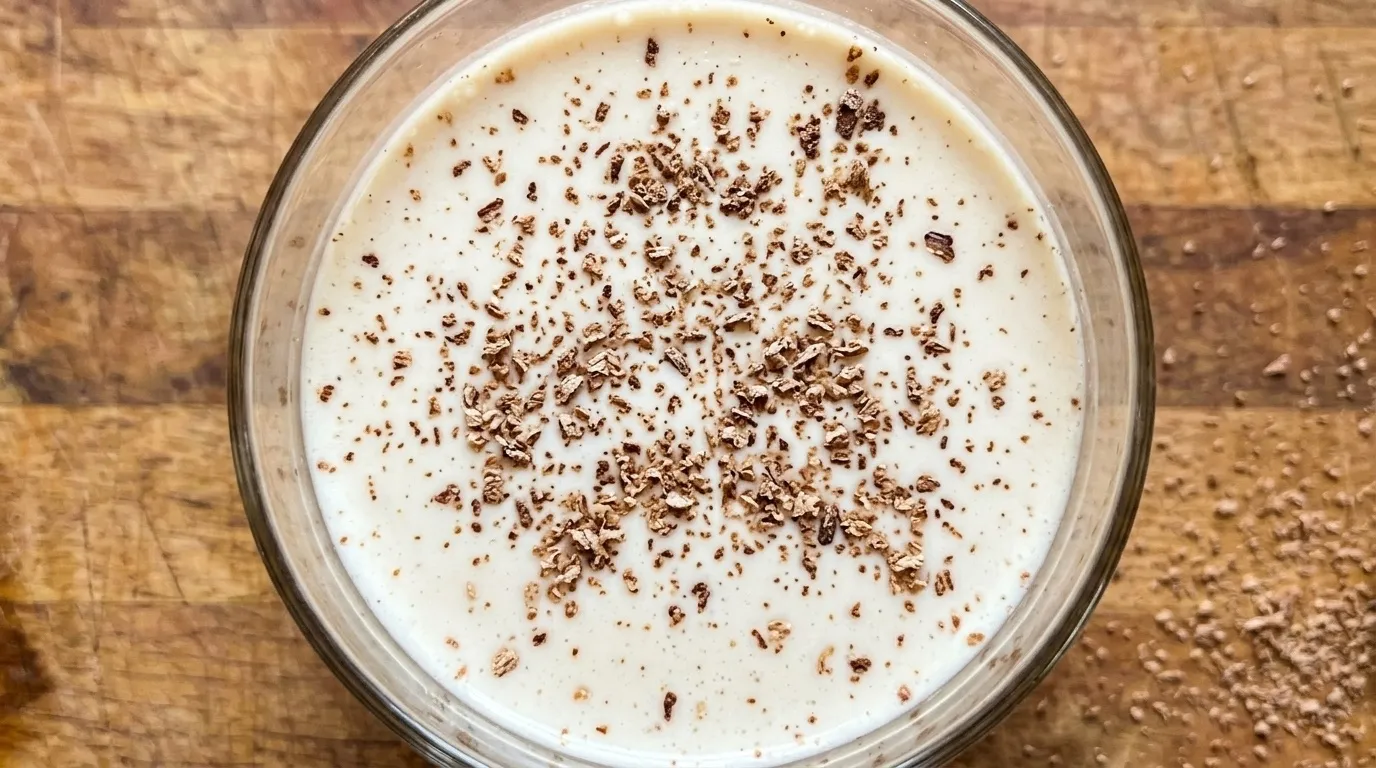
But the real discovery was the nutmeg. Fresh nutmeg. And I cannot stress this enough — fresh, whole-nutmeg-on-a-microplane nutmeg, not the pre-ground dust that’s been sitting in your spice cabinet since the previous administration. Here’s why: nutmeg contains myristicin and elemicin, volatile aromatic compounds that start degrading the moment the seed is ruptured. Pre-ground nutmeg has lost most of its volatile aromatics within weeks. What you’re tasting with pre-ground is the baseline terpene profile — warm, vaguely sweet, basically wallpaper. But when you grate whole nutmeg fresh, those volatiles hit your nose immediately, and they transform the drink. Suddenly it’s not “milk with booze and nutmeg flavor.” It’s alive. It smells like a kitchen. Like a farmhouse. Like a place where someone is taking care of something. The nutmeg is the difference between a cocktail and Lon Lon Milk.
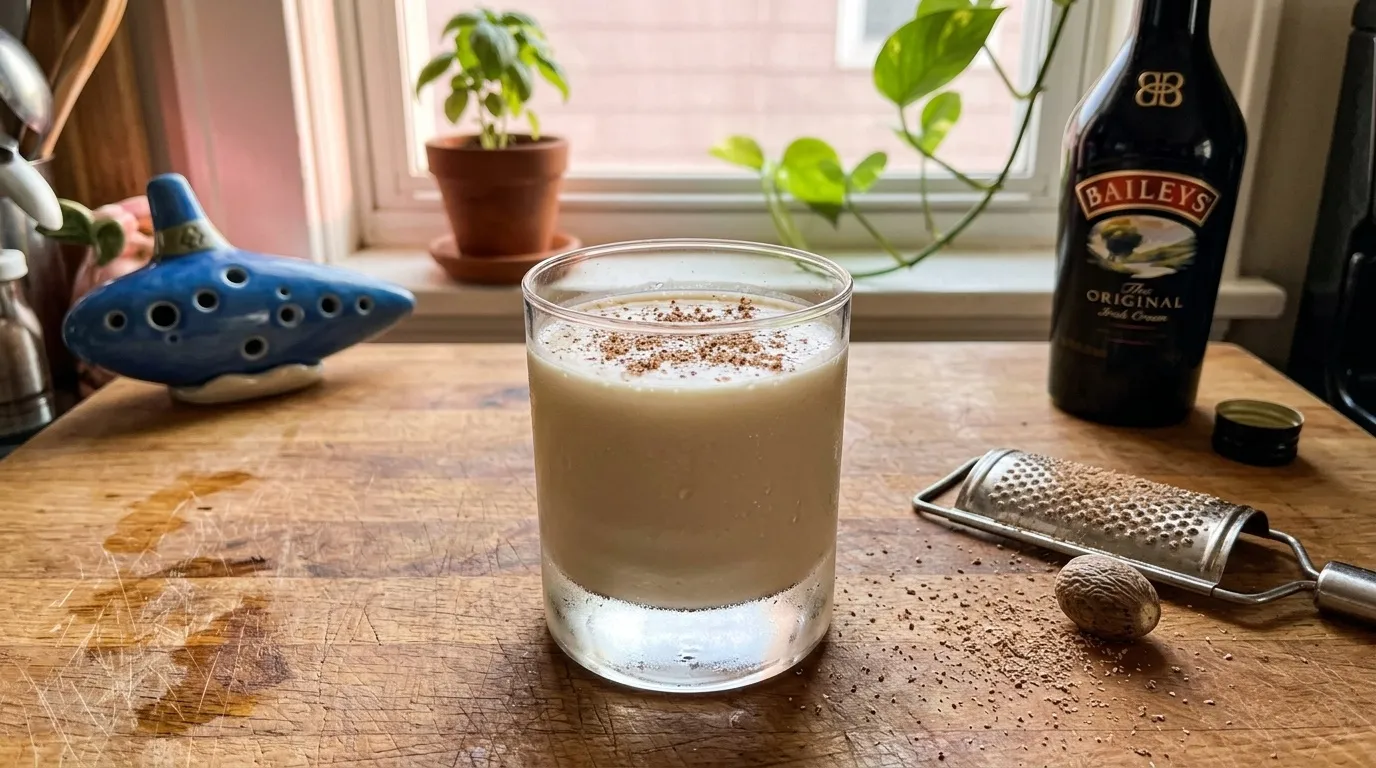
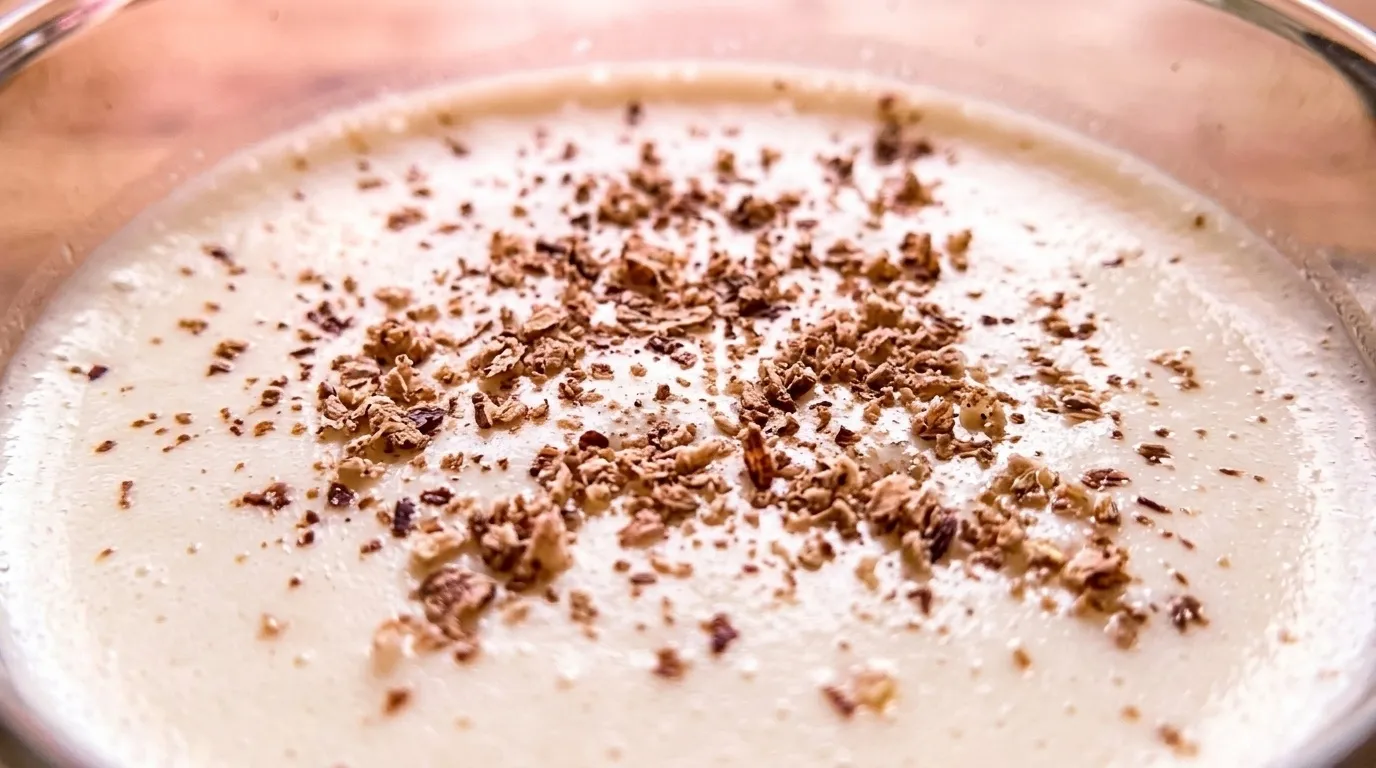
I grated it right there, two in the morning, standing over the glass in my pajamas. I watched the little flakes fall onto the surface of the cream. I picked up the glass. I smelled it. And then I took a sip and I was back in that pasture, standing in late-afternoon sun, holding a glass cup of milk that tasted like where it came from.
I woke Mark up to try it. He was very supportive about being woken up. (He was not very supportive about being woken up. But he tasted it and said “oh, that’s really good” and then went back to sleep, and from Mark at 2 AM, that’s a standing ovation.)
I’ve written it exactly as I make it. The recipe is simple because Lon Lon Milk is simple — but simple doesn’t mean careless. The proportions matter. The freshness of the nutmeg matters. The temperature matters. Make it with attention and it will taste like standing in a field on a warm afternoon with nowhere to be and nothing to fight.
Make this for a quiet night. Make this for the end of a long quest, whether that’s a workweek or a dungeon or just a Tuesday that wouldn’t end. Make this for someone who needs to feel, even for a few minutes, like everything is going to be fine.
Malon would want you to have it.
The Hero's Rest (Lon Lon Milk)
Ingredients
Instructions
- Combine Irish cream, vanilla vodka, whole milk, and honey syrup in a cocktail shaker. Look at it. It's already beautiful and you haven't even done anything yet.
- Add ice and shake until the outside of the shaker frosts over and your hands start to complain — about 15 seconds. You want this cold. Pasture-morning cold.
- Strain into a chilled rocks glass. Watch the pour. It should come out thick and slow, like it's in no rush. Neither are you.
- Grate fresh nutmeg generously over the top. More than you think. Then a little more. Trust the process.
- Dust a tiny pinch of cinnamon on top if you're feeling it. Malon never mentioned cinnamon but Malon also never said no.
- Drink while humming Epona's Song. This is not optional. This is medicine.
Magnolia’s Notes
-
On the Irish cream: Baileys is the standard and it works beautifully here. If you can find a smaller-batch Irish cream — Coole Swan is extraordinary, Five Farms is gorgeous — the cleaner dairy flavor makes a noticeable difference. The thing to understand is that Irish cream isn’t just adding flavor; it’s an emulsion that gives the drink its body and richness. It’s the reason this tastes like milk and not like a White Russian’s less interesting cousin.
-
On the nutmeg: I will not relent on this. Whole nutmeg, freshly grated, or don’t bother. Pre-ground nutmeg loses its volatile aromatic compounds within weeks of grinding. You’re tasting the baseline terpenes without the myristicin and elemicin that make freshly grated nutmeg smell like a farmhouse kitchen. A whole nutmeg costs about a dollar and lasts for dozens of drinks. Get a microplane. This is the single biggest upgrade you can make to this cocktail. Ask me how I know. (I know because batch one through three were made with pre-ground and they tasted like nothing. Batch four, fresh nutmeg, two in the morning, changed everything.)
-
On the honey syrup: Two parts honey to one part warm water. Stir until dissolved. That’s it. Keeps in the fridge for two to three weeks. Do not substitute simple syrup — honey has floral, almost grassy aromatic compounds that sugar simply does not, and in this drink those compounds are doing real work. They’re the bridge between “boozy milk” and “something that tastes like a field.” Use a mild, light-colored honey. Clover honey is poetically perfect. Buckwheat honey will fight the other flavors and win, and nobody wants that.
-
On the milk: Whole. Full fat. I tested this with oat milk (too thin, too sweet), 2% (lost the body), and half-and-half (too heavy, became a dessert). Whole milk is the Goldilocks. If your whole milk is ultra-pasteurized, it’ll still work, but if you can find cream-top or minimally processed whole milk, the difference in texture is real. The fat is the carrier for the flavor compounds from the nutmeg and the honey. Less fat means less flavor delivery. This is not an opinion; this is chemistry.
-
On the temperature: Chill the glass. Shake with plenty of ice. Serve immediately. This drink does not improve as it warms. Cold is the whole point — cold milk, warm feeling. That contrast is the magic. If you’re making these for a group, shake each one individually rather than batching. A batch will warm up while you’re pouring and you’ll lose the frost on the glass and the freshness of the nutmeg and honestly what are we even doing here if not caring about things.
Did you make this? Show me your ranch-fresh results. And if anyone asks, Ingo had nothing to do with this recipe. He wants that on the record.